Your breast milk contains essential enzymes, hormones and antibodies.
These are vital for your baby’s normal growth, development and good health. Storing your breast milk safely makes sure those immune properties help protect it from bacteria growth.
Store expressed breast milk in small amounts. This way, there will be less waste if your baby only takes a small amount. Storing in smaller amounts also means quicker defrosting time if your baby wants more.
The storage guidelines on this page are for full-term healthy babies. If your baby is premature or sick, your hospital will have their own milk storage guidelines to follow.
When to store expressed milk
Fresh breast milk is best for your baby. This is milk that has been expressed and can be used within 4 hours at room temperature. Fresh breast milk can also be safely stored for up to 24 hours in an insulated cooler bag with frozen ice packs.
Expressed breast milk can be stored in a fridge for 5 to 7 days. It can be stored in the freezer for longer periods.
Containers for expressed milk
Use a clean container for storing expressed milk.
Types of containers include:
- breast milk storage bags
- tempered glass bottles (such as pyrex)
- food grade storage containers
Steel containers are not recommended for long term use.
Do not use sandwich bags. They can tear and contaminate milk easily.
If you feed your baby using mostly expressed breast milk, consider using tempered glass containers. These are better for preserving the antibodies in breast milk. If freezing tempered glass, allow enough space in the container for expansion.
Breast milk storage bags
Breast milk storage bags are very handy for storing small amounts of milk. You can place the bags inside a container in your freezer to protect them.
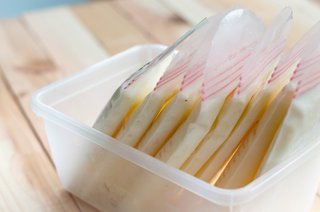
Breast milk storage bags take up less room in the freezer. Many are single-use items, so there is no washing involved. Some milk storage bags will connect directly to a breast pump.
You do not need to sterilise milk storage bags before use. But you should use them fresh from the pack so that they are as clean as possible.
Hard containers
Hard containers are made of food grade plastic or tempered glass. Research shows that you lose fewer milk fats and antibacterial cells when using these containers compared with steel. The drawback is that they can take up a lot of space in your freezer.
Wash, rinse and sterilise all containers before using them for milk storage.
Do not use chemical sterilisation on any storage containers. Use a steam steriliser or microwave steriliser instead.
Ask our breastfeeding experts
Tips for safely storing breast milk
You can add batches of expressed milk together. Always cool freshly expressed milk in the fridge before you add it to refrigerated milk.
Always leave about 1 inch of space at the top of the container to allow for expansion. Just like water for ice cubes, breast milk expands when you freeze it. Hard containers can pop open and bags can break as the milk expands.
Follow these tips to safely store your breast milk:
- Feed your baby fresh milk first whenever possible.
- Squeeze out the air at the top of the storage bag and fasten it 1 inch above the milk.
- Lay the bags down in a container in the freezer - flatter packages will thaw more quickly.
- Make sure they’re sealed well so that they do not leak.
- Label each container with the date.
- Keep all your hard containers of milk together inside a larger box.
- A large lunch box is ideal for storing the oldest milk at the front.
- Use the oldest milk first.
How long to store breast milk
You can keep stored milk:
- sealed outside of the fridge - for up to 4 hours in temperatures less than 20 degrees Celsius
- in a fridge - for up to 5 to 7 days (place it on a shelf and not inside the door)
- in a fridge freezer - for 3 to 6 months
- in a deep freezer - for up to 12 months
Store breast milk at the back of the fridge, on the shelf above the vegetable compartment. This is the coldest part of the fridge.
Do not store in the fridge door as the temperature is less consistent.
When stored in the fridge, your breast milk will separate into layers with fatty milk at the top. This is normal.
Refrigerated and frozen breast milk may have a different odour and colour to fresh breast milk. Most babies will drink refrigerated or defrosted frozen milk regardless of the difference.
Previously frozen milk
Previously frozen breast milk can be kept in the refrigerator for 24 hours after thawing.
This means that you can thaw the milk for all your baby's feeds overnight in the refrigerator if you wish. This can make it faster to prepare when your baby is hungry.
Freezing can change some of the nutrients in milk. For example, it may reduce fat content and certain vitamins. But it is still a good option.
Important
Do not refreeze milk that has thawed.
Storing breast milk on the move
Research shows that bacteria does not grow quickly in breast milk. You can keep it safely at room temperature for up to 4 hours.
Do not worry if you cannot rush your milk to the fridge right after you express. But do refrigerate the milk as soon as possible. Keep it cool when travelling, using an insulated container with reusable ice packs.
It is normal for the colour and smell of refrigerated or frozen breast milk to change over time.
Foods such as eggs, cheese, fish, carrots and beetroot may cause a change in smell in refrigerated or frozen milk. Some medicines may also cause a change in smell.