
Dandruff is a common skin condition. It is not harmful. You cannot catch it from another person.
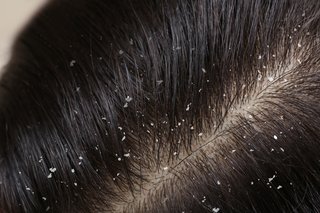
You can notice the flakes more:
- in darker hair
- if they fall on your clothes
Your scalp may be dry and itchy.
How to treat dandruff yourself
Use an anti-dandruff shampoo. You can buy this from a pharmacy or supermarket. There are many types.
Look for a shampoo that has 1 of these ingredients:
- salicylic acid
- selenium sulphide (or selenium sulfide)
- ketoconazole
- coal tar
Use the shampoo for 1 month to see if your dandruff improves. Try a few different shampoos to know which is best for you.
Non-urgent advice: Contact a GP if:
- you have dandruff after using anti-dandruff shampoo for 1 month
- your dandruff is bad
- your scalp is very itchy
- your scalp is red or swollen
A GP can check your scalp for skin conditions that could be causing your dandruff.
Causes of dandruff
Dandruff is not caused by poor hygiene. But you may notice it more if you do not wash your hair often.
Stress and cold weather may also make dandruff worse.
Skin conditions that cause an itchy, flaky or scaly scalp include:
- seborrheic dermatitis - scaly, itchy and red patches on your scalp, face or body
- ringworm - red or silver rash on your scalp, sometimes with patchy hair loss
- eczema - dry, red, flaky and very itchy skin
- contact dermatitis - red, inflamed skin caused by an allergy to ingredients in hair or skin products
- psoriasis - red, flaky, crusty and sore patches of skin covered with silvery scales
- cradle cap in babies - a build-up of dry skin and natural oils on your baby's scalp
Do not worry if you are not sure what causes your dandruff.
Content supplied by the NHS and adapted for Ireland by the HSE
