
Erythema multiforme is a skin condition. It is caused by a reaction to an infection or some medicines. It is usually mild and goes away in a few weeks.
A severe form of the condition can affect your mouth, genitals and eyes. This is called erythema multiforme major. It is rare but can be life-threatening.
Erythema multiforme mainly affects adults under age 40, but it can happen at any age.
Symptoms of erythema multiforme
The main symptom of erythema multiforme is a rash.
The rash starts suddenly and develops over a few days.
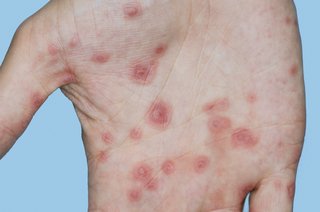
It often starts on the hands or feet and spreads to the limbs, upper body and face. The rash usually appears in the same areas on both sides of the body.
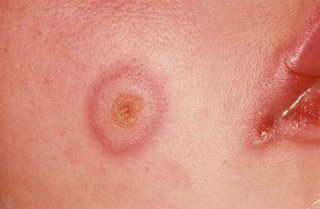
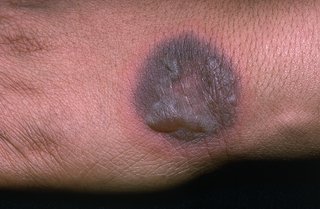
At first, the rash may look like round spots. Then it usually starts to look like a bullseye. This is often called a target lesion. It may be itchy or uncomfortable. But it usually fades over 2 to 4 weeks.
In more severe cases, the patches of the rash may join together. This can cause raw and painful areas of skin.
Other symptoms
Other symptoms of erythema multiforme are:
- feeling unwell with fatigue, joint aches or fever - this may come before the rash
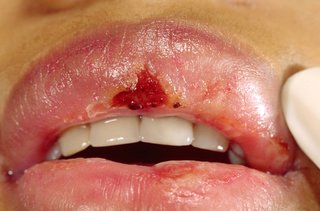
- raw sores inside your mouth - these can make it hard to eat and drink
- swollen lips covered in crusts
- sores on the genitals that make it painful to pee
- sore, red eyes
- sensitivity to light and blurred vision
- aching joints
These symptoms are more common in erythema multiforme major. They can also happen in a similar skin condition called Stevens-Johnson syndrome.
See what erythema multiforme inside your mouth looks like
Non-urgent advice: Contact a GP if
you think you have erythema multiforme and:
- the rash is inside your mouth or on your lips, eyes, anus or genitals
- the rash is painful
- it is difficult to eat or pee
- you have a high temperature, body aches or pain
- the rash appeared after your started taking a new medicine
What happens at a GP appointment
Your GP will look at the rash. If they are not sure if you have erythema multiforme, they can refer you to a dermatologist (skin specialist).
They will refer you to hospital immediately if they think you have:
- erythema multiforme major
- Stevens-Johnson syndrome
These conditions can be serious.
Treatment for erythema multiforme
Erythema multiforme usually gets better on its own in 2 to 4 weeks.
Treatment can ease your symptoms and stop your skin getting infected.
Your GP may recommend:
- you stop taking a medicine if they think it triggers your symptoms - do not try this without speaking to your GP first
- antihistamines and moisturising cream (emollients) to reduce itching
- steroid cream to reduce redness and swelling (inflammation)
- painkillers
- antiviral tablets, if the cause is a viral infection
- anaesthetic mouthwash, if you have mouth sores
More severe cases may be treated in hospital.
Causes of erythema multiforme
The cause of erythema multiforme is not always clear.
It may be caused by:
- a reaction to an infection or medicine
- your genetics
The condition cannot be passed from person to person.
Infections
Most cases of erythema multiforme are caused by a viral infection. For example, the cold sore virus.
The cold sore virus is usually inactive in the body. But it can be reactivated. Some people get a cold sore a few days before the rash starts.
Erythema multiforme can be triggered by the same type of bacteria that can cause chest infections.
Medicines
Some medicines can cause erythema multiforme major.
Medicines that may trigger it are:
- antibiotics, such as sulfonamides, tetracyclines, amoxicillin and ampicillin
- non-steroidal anti-inflammatory drugs (NSAIDs), such as ibuprofen
- anticonvulsants (used to treat epilepsy), such as phenytoin and barbiturates
Complications
Most people with erythema multiforme recover within a few weeks. There are usually no more problems and the skin heals without scarring.
Erythema multiforme can come back, especially if it was caused by the cold sore virus.
If it comes back often, a GP may prescribe antiviral medicine to help prevent it.
Content supplied by the NHS and adapted for Ireland by the HSE
