
A pilonidal sinus is a skin defect in the natal cleft (division) at the top of your bottom. It is caused by ingrown hair. Pilonidal sinus only needs to be treated if it becomes infected.
Check if you have an infected pilonidal sinus
Most people with a pilonidal sinus do not notice it unless it becomes infected and causes symptoms.
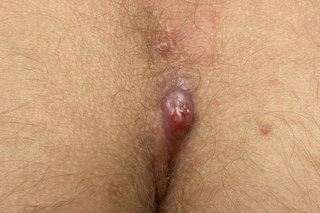
An infection causes pain and swelling. A pus-filled abscess can develop. This can make it difficult to sit down.
If you keep getting infections you may have ongoing problems. For example, discomfort, pain and regularly seeping pus or blood.
See what an infected pilonidal sinus looks like
Urgent advice: Ask for an urgent GP appointment if:
- you notice sudden pain and swelling at the top of your bottom (between your buttocks)
These symptoms can develop quickly, often over a few days. They're signs of infection and need to be treated.
A pilonidal sinus that's not infected
You do not need treatment if there are no signs of infection. A watch and wait approach is recommended.
To reduce the risk of infection, keep the area between your buttocks clean. Have regular showers or baths.
Important
Do not shave the affected area unless your GP tells you to.
Treatment for an infected pilonidal sinus
Treatment for an infected pilonidal sinus depends on:
- your symptoms
- the size of the sinus
- if it's your first sinus or it keeps coming back
An abscess needs treatment with antibiotics. The pus inside usually needs draining.
You need treatment if a pilonidal sinus keeps coming back and causes pain, bleeding or discharge. Talk to your GP about treatment options.
Continued management
To prevent infection, you can:
- keep the area clean - have regular showers or baths
- shave the area often if your GP recommmends hair removal
- get help to stop smoking if you smoke
Laser hair removal can also help.
Minor operation to drain pus from sinus
If you have an infected abscess, you may need a minor operation to have the pus drained from it.
Incision and drainage
A small hole is made in the abscess so the pus can be drained.
You have a general anaesthetic or local anaesthetic, depending on the size of the abscess. The procedure is done in hospital. You can usually go home that same day.
Your recovery time is usually between 4 to 6 weeks. The hospital team will explain the dressing changes you need and how to care for your wound.
Surgical treatments
You may need need surgery for a large or repeatedly infected sinus.
Local excision and open healing
With this type of surgery, the doctor removes the sinus and some skin. The wound is left open to heal naturally.
You have a general anaesthetic (you're asleep). You have the procedure in hospital. You can usually go home that same day.
Your recovery time is usually between 6 to 12 weeks. The hospital team will explain the dressing changes you need and how to care for your wound. There is a 10 to 20% chance of the issue coming back.
Minimally invasive surgery
The surgeon removes the sinus and inserts a drain.
You have a local anaesthetic (you're awake). The surgery results in less scarring and pain. But it can be uncomfortable and may cause bleeding.
When the wound is free of infection, the drain can be removed.
Endoscopic pilonidal sinus treatment
The surgeon uses a tiny camera to check and clean the sinus tracts. The wound is very small and you can go home the same day.
Flap reconstruction
The surgeon removes the whole pilonidal sinus and any affected tissue around it. Your GP needs to refer you to a plastic surgeon for this type of surgery.
Follow-up
You'll have a follow-up appointment with your specialist after your surgery. The appointment is usually about 6 weeks later, but may be slightly longer.
What to do after your operation
Do
-
keep the affected area clean
-
wear comfortable, loose-fitting cotton underwear
-
eat plenty of fibre to make going to the toilet easier and avoid straining
Don't
-
do not lift heavy objects or do strenuous exercise for the first week or so
-
do not ride a bike for 6 to 8 weeks
-
do not go swimming until your wound has completely healed
Going back to work
How soon you can return to work depends on:
- the procedure you had
- how quickly you recover
- the type of job you do
Most people can return to work within 2 weeks of surgery.
Your surgeon will give you more advice about your recovery.
Causes of pilonidal sinus
It's not clear what causes a pilonidal sinus.
It may be caused by hairs that fall down from the head or the upper back and get trapped in the natal cleft.
Pilonidal sinuses are more common in men because they tend to be hairier.
Sitting for long periods can also increase your chances of getting a pilonidal sinus.
Content supplied by the NHS and adapted for Ireland by the HSE