
Pityriasis rosea is a common skin condition. It causes a temporary rash of raised red scaly patches on the body.
It can affect anyone. But it's more common in older children and young adults, ranging between age 10 and 35.
Check if you have pityriasis rosea
The main symptom of pityriasis rosea is a rash.
Many people get flu-like symptoms a few days before the rash appears.
Flu-like symptoms include:
- joint paint
- a high temperature (38 degrees Celsius or higher)
- a headache
- a cough
- a sore throat
The rash appears in 2 stages.
Stage 1: Single, round patch
The first stage of the rash is a single, scaly patch called a herald patch.
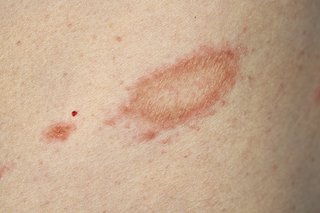
The herald patch is usually 2cm to 5cm.
It can appear on your tummy, chest, back or neck. Less often it can appear on your face or scalp, or near your genitals.
Stage 2: widespread rash
A few days or weeks after the herald patch appears, a more widespread rash develops. This rash usually lasts up to 10 weeks.
How the rash looks
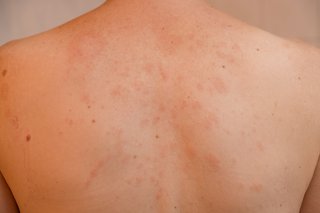
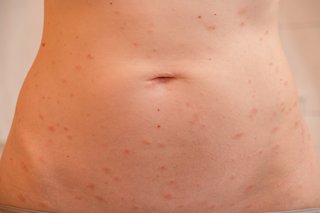
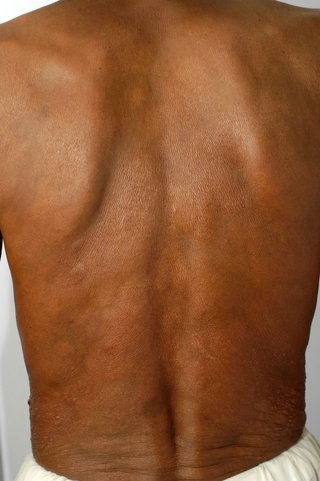
This rash looks like oval scaly patches. Most people get patches on their chest and back. It can spread to the arms and legs. It does not usually affect the face in adults.
The rash is not painful, but it can be itchy.
How long the rash lasts
The herald patch and rash usually last for 2 to 12 weeks. Sometimes it can last longer, but this is rare.
When the rash is gone, you may have darker or lighter areas of skin. How obvious they are depends on your skin tone. These areas should be normal in a few months. It will not scar.
Other conditions similar to pityriasis rosea
Other conditions can have similar symptoms to pityriasis rosea.
For example, scaly spots may be:
A single, round patch may be ringworm.
A rash may be pityriasis versicolor.
Do not diagnose the problem yourself. Contact a GP if you are worried.
Non-urgent advice: Contact your GP if:
- you have a rash you cannot explain
They can confirm if it is pityriasis rosea. If your GP is not sure, they may refer you to a dermatologist (skin specialist).
Pityriasis rosea is usually harmless. But it may cause complications if you get it early in pregnancy. Contact your midwife or obstetrician if you are worried.
Treatment
Pityriasis rosea usually gets better on its own without any treatment. It should improve within 12 weeks. It might get worse before it goes away completely.
If the rash is uncomfortable or itchy, a pharmacist might tell you to:
- use an emollient (moisturising treatment for the skin)
- avoid soaps and body washes
They will tell you how often to take or apply treatment.
A GP can help you if:
- treatment from your pharmacy does not work
- you have severe pityriasis rosea
They may:
- prescribe a steroid cream
- refer you to a dermatologist (skin specialist)
- prescribe antihistamine tablets to help with the itching - you can also get these without a prescription from your pharmacy
If treatments from your GP does not work, they may refer you for ultraviolet B (UVB) light therapy.
Causes of pityriasis rosea
We do not know what causes pityriasis rosea. It may be a virus.
Pityriasis rosea is not contagious. It cannot spread to other people by physical contact.
Content supplied by the NHS and adapted for Ireland by the HSE