Penicillin and Cephalosporin Allergy

  • Around 10% of patients carry a penicillin allergy label. In approximately 90% of patients this diagnosis is incorrect.
  • A penicillin allergy label restricts antibiotic prescribing and can result in the use of sub-optimal second-line agents.
  • Penicillin allergy is not necessarily lifelong. The risk of true allergy declines over time. Approximately 50% of people lose their sensitivity 5 years after reacting, increasing to approximately 80% after 10 years.
  • Caution is advised BEFORE applying the label of penicillin allergy to any patient, especially when the clinical history is vague or not suggestive of a true allergic reaction.
    • This is especially important in young children where infectious illnesses are commonly associated with skin rashes (exanthema) and antibiotics prescribed during the illness can be incorrectly labelled as a cause of allergic reaction.

Table 1: Examples of beta-lactam antibiotics

Examples of beta-lactam antibiotics
(list not exhaustive)
Refer to the relevant guideline for the most appropriate antibiotic for the specific indication 

Penicillins Cephalosporins

Amoxicillin
Flucloxacillin
Phenoxymethylpenicillin
Benzylpenicillin
Co-amoxiclav

Cefalexin
Cefuroxime
Cefixime
Cefaclor
Ceftriaxone

1.1 Drug allergy history - the essential investigative tool

An accurate history is the first and most important step when assessing penicillin allergy or any drug allergy.

fig-1

Figure 1: Considerations for taking a drug allergy history

Allergy versus Non-allergic Events/Adverse effects:

Many patients can be directly de-labelled through a focussed history alone. A good history helps effectively stratify risk in patients that need immunology assessment (see ‘Referral to an Immunologist’ section).

Penicillin allergy is not an inherited disease. Patients reporting penicillin allergy due to a family history should be directly de-labelled.

fig-2

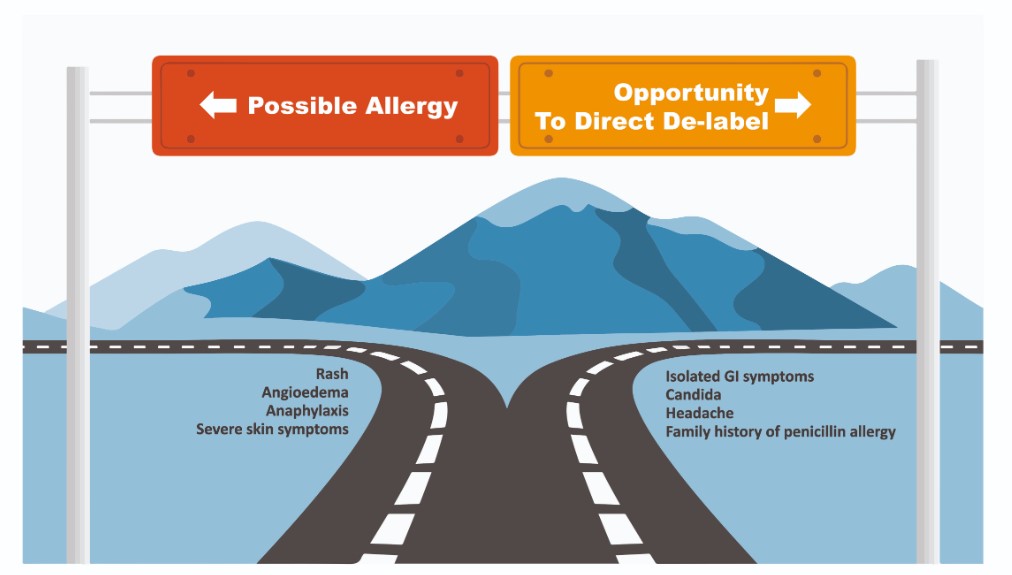
Figure 2: Identifying possible allergy and opportuities to de-label

1.2 Considerations for future antibiotic prescribing and investigations

Table 2: Considerations for future antibiotic prescribing and investigations

Nature of reaction Future prescribing of penicillin Investigation

Anaphylaxis
Angioedema
Acute urticaria within 4 hours of penicillin administration
Wheeze; airway swelling

Avoid penicillins

Avoid cephalosporins unless tolerance confirmed by specialist testing

Specialist immunology referral is advised. Skin testing and drug challenge may be used in select cases to confirm uncertain diagnoses or to identify potentially safe beta-lactam alternatives

Severe cutaneous adverse reaction (SCAR): includes Stevens-Johnson syndrome (SJS); toxic epidermal necrolysis (TEN); drug reaction with eosinophilia and systemic symptoms (DRESS); acute generalised exanthemous pustulosis (AGEP)

Avoid all beta-lactam antibiotics (which include penicillins and cephalosporins)

Referral to immunology is not required as investigation not generally undertaken. Diagnosis is clinical.


Haemolytic anaemia, drug induced cytopaenia, interstitial nephritis, drug-induced liver injury and serum sickness Avoid all beta-lactam antibiotics (which include penicillins and cephalosporins) No role for drug allergy assessment. Immunology referral is not required. 
Late onset non-severe skin reactions
Viral exanthema; delayed onset, maculopapular or morbilliform rashes without systemic upset, prolonged urticaria in the context of intercurrent infection
Cautious future use of beta-lactams is reasonable. Adverse events may recur, but are unlikely to be severe or life- threatening Consider immunology referral as extended oral challenge with penicillin may help confirm or exclude allergy

Non-allergic side effects
Gastrointestinal upset
Candidiasis
Headache

Future use of penicillin is reasonable


No testing is required. Immunology referral is not required


Family history of penicillin allergy Not predictive of allergy in family members; penicillin use should not be avoided No allergy testing is required. Immunology referral is not required.
History of asthma or other allergic conditions Not predictive of penicillin allergy risk Pre-emptive testing is not useful
Note: The administration of any drug carries with it the risk of adverse drug reactions, which may be severe with any dose, including anaphylaxis. People who have previously tolerated penicillin may develop allergic reactions at later time points. This risk is usually very low but must be considered as part of the risk: benefit assessment associated with medication prescription. The assessment and management of allergic reactions including anaphylaxis should be part of the competency of healthcare professionals involved in the prescription and administration of antibiotics and other medications.


1.3 Opportunities for de-labelling penicillin allergy

fig-2

Figure 2: Identifying possible allergy and opportuities to de-label

Many patients can be directly de-labelled through a focussed history alone. A good history helps effectively stratify risk in patients that need immunology assessment (see ‘Referral to an Immunologist’ section).

Penicillin allergy is not an inherited disease. Patients reporting penicillin allergy due to a family history should be directly de-labelled.'

A simple allergy history (as above, Section 1.1) may allow identification of clearly non-allergic symptoms.

Direct de-labelling is appropriate when the reported symptoms include:

  • Nausea or other isolated gastrointestinal symptoms
  • Headache
  • Mucosal candidiasis
  • Patients reporting penicillin allergy due to a family history

In these instances it is appropriate to directly remove the allergy label without need for further assessment. Patients can be told that the history is not in keeping with penicillin allergy and that there is no need for them to avoid penicillins in the future. When de-labelling penicillin allergy, update all healthcare records (e.g. GP, pharmacy, dentist, etc.) and communicate this change to other healthcare providers. Ensure the patient clearly understands the change in their allergy status. It may be useful to communicate this in writing to all parties involved.

1.4 When to avoid penicillin

When the history suggests:

  • Anaphylaxis
  • Angioedema
  • Acute urticaria temporally related to penicillin administration
  • Wheeze/ symptoms suggestive of airway compromise
  • Severe cutaneous adverse reactions (SJS, TEN, AGEP, DRESS)
  • Haemolytic anaemia, drug-induced cytopaenias, interstitial nephritis, drug-induced liver injury, serum sickness

Patients should be advised to carry personal indicators (e.g. alert jewellery) indicating allergy and avoidance requirements.

Refer to Table 1: Examples of beta lactam antibiotics

1.5 Documentation of drug allergy status

At a minimum, drug allergy documentation should contain:

  • Drug name
  • Signs, symptoms and severity
  • Date of occurrence

If the allergy status changes, through review, assessment or testing, update the healthcare records (e.g. GP, hospital, pharmacy, dentist, etc.).

Remove the allergy label and communicate this removal to the patient if:

  • the history is inconsistent with allergy or
  • the patient has had negative allergy testing.

1.6 Referral to an immunologist or allergy specialist

The following patient groups are prioritised for assessment :

  • Patients with an increased antibiotic requirement such as in setting of recurrent infections for any reason
  • When there is an absolute requirement for penicillin and other alternatives are not suitable
  • Reactions to multiple antibiotics of different classes

Patients with histories that are not in keeping with a true allergic reaction to penicillin do not need to be referred to immunology services or allergy services.

Use of the PENFAST tool is encouraged, in addition to providing a clear history, to assist in referral triage.

Fig 3 PEN FAST

Figure 3: PEN-FAST Penicillin Allergy Risk Tool

  • Drug allergy assessment – what can a patient expect? The referral will be triaged based on clinical need. Lowest priority referrals will be those sent for assessment without any clear antibiotic requirement. Waiting times for routine referrals may be lengthy as immunology services are constrained by staffing and space.
  • An initial assessment of risk will be carried out by taking a drug allergy focussed clinical history. For penicillin allergy referrals this process will be greatly enhanced if a PENFAST score is included in the referral.
  • Low risk patients will typically be offered a direct oral challenge with amoxicillin or a similar beta-lactam antibiotic under supervision in an immunology day ward. This process typically takes 1-2 hours.
  • Medium/ high risk patients will undergo skin prick testing with a selection of penicillin and beta-lactam medications. If negative this will progress to intradermal testing, where a small amount of the drug is injected into the skin. If these risk management procedures are negative, then an oral challenge will be offered. This entire process can take 3-5 hours.
  • It is important that the patient understands that the end point of the testing process is an exposure to (or challenge with) the suspect agent. Referring clinicians should counsel patients about this at the point of referral.
  • Penicillin specific IgE tests are widely available, but are poorly sensitive and often uninformative. Their use outside expert settings is not recommended.
  • Testing for patients that have had Severe Cutaneous Adverse Reactions (SCAR) remains complex. Often no tests are indicated and the focus is on providing information and optimising future management.

1.7 Alternative antibiotics in penicillin-allergic patients

  • Patients labelled with a penicillin allergy can safely receive:
    • All non beta-lactam antibiotics (see table 3 below)
    • Cephalosporins if:
      • No history of anaphylaxis or other severe reaction to penicillins.
      • The label of allergy is unverified and mild – (eg. historic childhood rash)
  • Avoid cephalosporins in patients with a history suggestive of a severe penicillin allergy (anaphylaxis, angioedema, wheezing, temporally related acute urticaria, SCAR) unless specialist testing confirms tolerance.

Table 3: Examples of non-beta-lactam antibiotics

Examples of non-beta-lactam antibiotics
(list not exhaustive)
Refer to the relevant guideline for the most appropriate antibiotic for the specific indication

Trimethoprim, nitrofurantoin, fosfomycin
Tetracyclines e.g. doxycycline, lymecycline
Macrolides e.g. clarithromycin, azithromycin, erythromycin
Clindamycin
Fluoroquinolones e.g. ciprofloxacin, moxifloxacin, ofloxacin
Metronidazole

1.8 Cephalosporin allergy

  • The incidence of cephalosporin allergy is estimated to be 1–3% of the general population.
  • Patients with a cephalosporin allergy label should avoid all cephalosporins unless allergy testing has indicated tolerance of specific cephalosporins.
  • Patients labelled with cephalosporin allergy, can receive a penicillin if:
    • There is no history of anaphylaxis or other severe reaction
    • The allergy label is unverified and mild (e.g. historic childhood rash)
  • Patients with a cephalosporin allergy can have all non-beta-lactam antibiotics.

Table 3: Examples of non-beta-lactam antibiotics

Examples of non-beta-lactam antibiotics
(list not exhaustive)
Refer to the relevant guideline for the most appropriate antibiotic for the specific indication

Trimethoprim, nitrofurantoin, fosfomycin
Tetracyclines e.g. doxycycline, lymecycline
Macrolides e.g. clarithromycin, azithromycin, erythromycin
Clindamycin
Fluoroquinolones e.g. ciprofloxacin, moxifloxacin, ofloxacin
Metronidazole